WashU Well-being Collective’s Common Agenda seeks to strengthen the health and sustainability of our community and contribute to the well-being of people, places and the planet as guided by the Okanagan Charter.

“A healthy planet and well-cared for places are essential for healthy people.”
– Limerick Framework
Explore our “why”
WashU publicly affirms that health and well-being are fundamental to its mission and the success of its community through adopting the Okanagan Charter.
The Charter shifts the focus from addressing individual health concerns to creating a campus environment where health and well-being are intentionally embedded in university policies, practices, programs and culture.
This commitment recognizes that a healthy, supported campus community is essential for individuals to reach their full potential, achieve academic and professional success, and accomplish their personal and institutional goals.
Data-informed strategies will guide our well-being initiatives and measure our progress. Shared key metrics will align partners across the university around common goals, support continuous improvement, and enable coordinated action toward our shared agenda.
Foundational frameworks guiding this work
Okanagan Charter
The Okanagan Charter (2015) is an international framework that guides post-secondary institutions to embed health and sustainability into all aspects of campus life. Rather than focusing only on individual wellness, it calls for a systemic approach by transforming administration, operations and academic practices to create environments that support the long-term well-being of students, staff and the global community.
“Health promotion requires a positive, proactive approach, moving beyond a focus on individual behavior towards a wide range of social and environmental interventions that create and enhance health in settings, organizations and systems, and address health determinants. As such, health promotion is not just the responsibility of the health sector but must engage [the entire campus community] to take an explicit stance in favor of health, equity, social justice, and sustainability for all, while recognizing that the well-being of people, places, and the planet are interdependent.”
“Health promoting universities enhance the success of our institutions; create campus cultures of compassion, well-being, equity and social justice; improve the health of the people who live, learn, work, play and love on our campuses; and strengthen the ecological, social, and economic sustainability of our communities and wider society. “
“Health promoting universities and colleges transform the health and sustainability of our current and future societies, strengthen communities, and contribute to the well-being of people, places and the planet.”
Okanagan Charter: An International Charter for Health Promoting Universities and Colleges (2015)
Source: Okanagan Charter: An International Charter for Health Promoting Universities and Colleges (2015)
Limerick Framework for Action

A roadmap for the implementation of health promotion efforts across the higher education system.
“Building on the Vision of the Okanagan Charter (1), the Limerick Framework for Action envisages that: By embedding health, well-being, and sustainability across all aspects of higher education, Health Promoting Campuses (HPCs) empower students and employees to thrive, to strengthen surrounding communities, and advance the United Nation’s Sustainable Development Goals (2) leading to a healthy planet, healthy places, and healthy people. Through a whole-campus approach, HPCs drive action-oriented implementation, foster inclusive participation and partnerships, and document progress to address current and future challenges in a rapidly changing world.”
“The Limerick Framework for Action is a flexible guide for transformative change.” “The Framework serves as a guiding tool, empowering action rather than prescribing it, so all actors, regardless of location or stage of development, can take meaningful steps forward.”
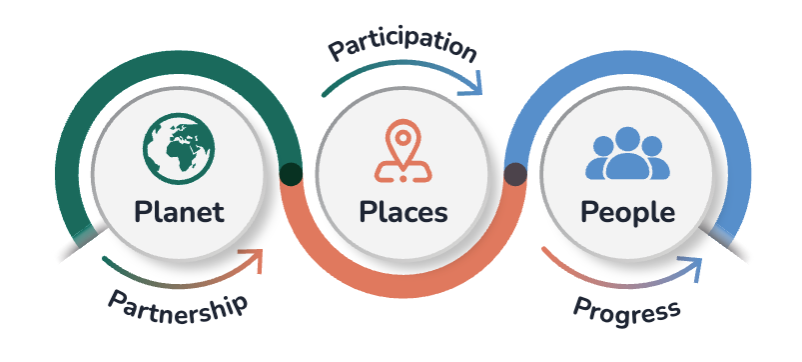
Source: The Limerick Framework for Action: Advancing the Global Health Promoting Campuses Agenda. Outcome of the 2025 International Health Promoting Campuses Conference. Limerick: University of Limerick, 2025
Centering Well-being

The 8 dimensions of well-being reflect a comprehensive view of well-being and the interconnected elements that contribute to individual and community health and well-being.
“Well-being encompasses quality of life, as well as the ability of people and societies to contribute to the world and have a sense of meaning and purpose.”
This is why WashU is taking a comprehensive approach. “By focusing on the whole—the whole person, the whole educational experience, the whole institution, and the whole community—well-being becomes a multifaceted goal and a shared responsibility.”
Fostering well-being isn’t optional; it’s essential. As WashU commits to this shared responsibility, we will create an environment where people don’t just succeed, but where they find purpose, contribute meaningfully, and reach their full potential.
“A university community cannot be measured by its academic and professional achievements alone. It must also prioritize well-being. The success of our WashU community is not just individual but tied to how each person engages with and uplifts others. Individual and community well-being are deeply interconnected. When one thrives, the other benefits.”
Associate Vice Chancellor for Health and Well-being Kirk Dougher, PhD
Source: Health promotion glossary of terms 2021. Geneva: World Health Organization; 2021. License: CC BY-NC-SA 3.0IGO
Source: NIRSA: Leaders in Collegiate Recreation, NASPA – Student Affairs Administrators in Higher Education & ACHA – American College Health Association (November 2020). Inter-association definition of well-being. Retrieved from www.nirsa.org/hands-in
WashU Well-being Collective
Established in April 2024 by Dr. Anna Gonzalez and chaired by Dr. Kirk Dougher and Arie Baker, the Health and Well-being Steering Committee was formed to work toward a campus culture where every student thrives emotionally, physically and academically.
This mission is a whole-campus effort, relying on listening and partnering across all departments and disciplines to ensure that well-being is not just an individual pursuit, but a shared institutional priority. The committee embodies the philosophy of Collective Impact, emphasizing the importance of student voices at the table to help interpret and translate historically gathered data into strategies and outcomes that resonate with students.
The committee compiled multiple sources of university well-being data to identify trends and gaps. This included a range of assessment tools used throughout the university, a report from a past campus-wide well-being working group, and comparisons of WashU data with national trends. The committee also collected feedback from campus members including students, faculty, and staff revealing key themes around student well-being.

Next steps

- Coordinate well-being efforts across WashU by expanding the steering committee to include Human Resources and the School of Medicine.
- Foster university-wide collaboration to create sustainable environments for students, faculty, staff and community well-being.
Getting involved

Cultivating a Health Promoting Campus is a collective effort, and every voice matters. Students, faculty, and staff are invited to participate through upcoming listening sessions, departmental well-being initiatives, and steering committee working groups. Together, we can shape policies and environments where our entire community thrives.